
Roasted butternut squash with honey, cinnamon, fresh figs, and walnuts is a simple fall dessert with warm, comforting flavors. The squash becomes soft and naturally sweet in the oven, while the honey and brown sugar create a glossy coating. Fresh figs add a fruity sweetness, and walnuts provide a pleasant crunch.
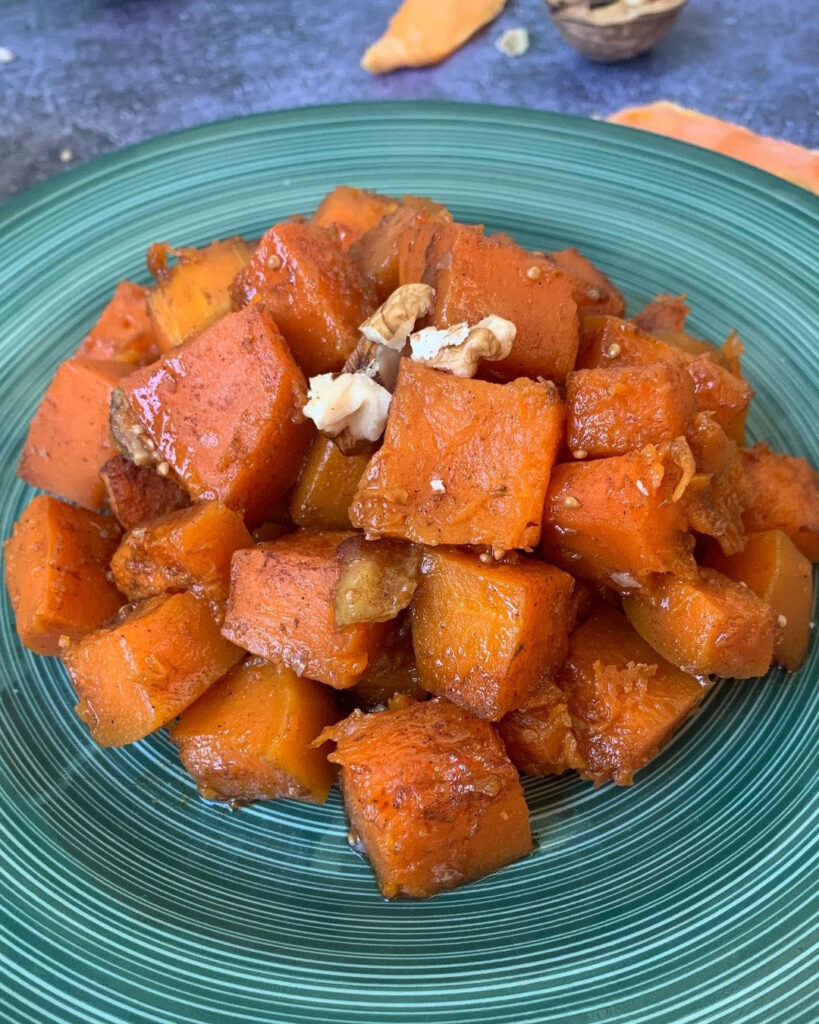
Inspired by traditional Bulgarian roasted pumpkin, this recipe turns a few seasonal ingredients into a dessert that’s easy to prepare and beautiful enough to serve at a fall gathering.
Unlike savory roasted butternut squash recipes, this version is meant to be enjoyed warm as a sweet treat. It requires very little preparation, and most of the cooking happens in the oven.
Why This Roasted Butternut Squash Recipe Works
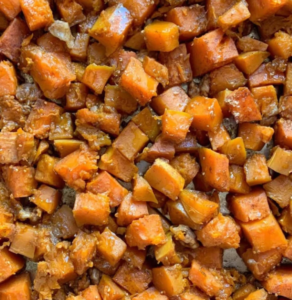
Butternut squash has a naturally sweet, slightly nutty flavor that becomes more pronounced when roasted. Its firm flesh softens in the oven while the edges can develop a lightly browned finish.
Honey and brown sugar complement that natural sweetness, while cinnamon adds a familiar warm flavor without overpowering the squash.
What makes this recipe especially good is the combination of textures. The tender squash contrasts with the slightly chewy roasted figs and crunchy walnuts.
Adding the figs and walnuts toward the end of baking is important. The squash needs more time to soften, while delicate figs can lose their shape and walnuts can become overly dark if roasted for too long.
Ingredients and What They Add
This dessert uses just six ingredients, but each contributes something different to the finished dish.
- Butternut squash: Choose a squash that feels heavy for its size, with firm skin and no soft spots. Butternut squash has smooth flesh and a naturally sweet flavor, making it particularly suitable for roasting.
- Honey: Adds floral sweetness and creates a glossy coating as the squash cooks. Use a mild honey if you want the flavor of the squash and figs to remain the focus.
- Brown sugar: Adds a subtle molasses flavor and helps create a sweet coating. Light brown sugar has a milder taste, while dark brown sugar contributes a stronger molasses note.
- Cinnamon: Provides warmth and complements the squash’s natural sweetness. One teaspoon gives the dessert a noticeable cinnamon flavor without requiring additional spices.
- Fresh figs: Choose ripe but firm figs that will soften during roasting without completely falling apart. Their delicate sweetness pairs especially well with honey and walnuts.
- Walnuts: Add crunch and a slightly earthy flavor that balances the sweeter ingredients. Roughly chopped walnuts work well because they provide texture without becoming too fine.
If fresh figs aren’t available, you can prepare the roasted squash with honey and walnuts alone. The result will be simpler but still flavorful.
Tips for Perfectly Roasted Butternut Squash
Getting the right texture is the most important part of this recipe. You want the squash to be tender in the center, with lightly browned edges, rather than mushy or swimming in liquid.
Cut the Squash into Even Pieces
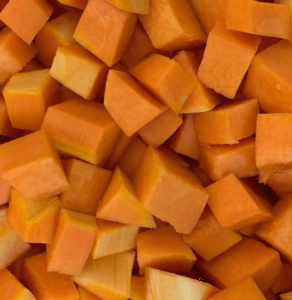
Cut the peeled squash into approximately 1-inch cubes. Similar-sized pieces cook at roughly the same rate, so you won’t end up with some pieces falling apart while others are still firm.
Smaller cubes may cook faster, so begin checking for tenderness before the full baking time has passed.
Give the Squash Enough Space
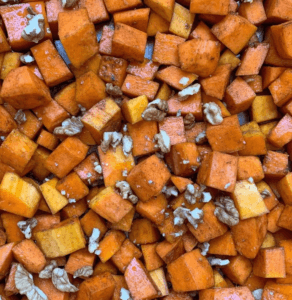
Spread the squash in a single layer rather than piling the cubes on top of one another.
A rimmed baking sheet generally allows more moisture to escape than a deep baking dish, helping the squash develop browned edges.
If the pieces are crowded together, they tend to steam rather than roast, resulting in a softer texture with less browning.
Watch the Honey During Roasting
Honey and brown sugar can darken quickly at high temperatures, particularly where they collect on the baking sheet.
Check the squash as it cooks and avoid letting excess honey pool around the pieces. A lightly browned coating is desirable, but dark, burnt sugar can introduce a bitter taste.
For additional sweetness, a small drizzle of honey after baking gives you more control over the finished flavor.
Add the Figs and Walnuts Near the End
Fresh figs are delicate and don’t need as much oven time as the squash.
Adding them during the final 10-15 minutes allows them to soften and warm through without completely losing their shape.
Walnuts also benefit from a shorter roasting time. They develop a toasted flavor, but prolonged exposure to high heat can make them taste bitter.
If the walnuts begin browning too quickly, remove them earlier.
How to Know When the Squash Is Done
Perfectly roasted butternut squash should be soft enough to pierce easily with a fork while still holding its shape.
The edges may look slightly golden, and the honey coating should appear glossy.
If the squash is still firm in the center, continue roasting for a few more minutes and check again.
If it becomes very soft and starts breaking apart, it has likely cooked longer than necessary. It will still taste good, but the pieces won’t have the same distinct shape.
Serving Suggestions
This honey roasted butternut squash is best served warm, shortly after it comes out of the oven.
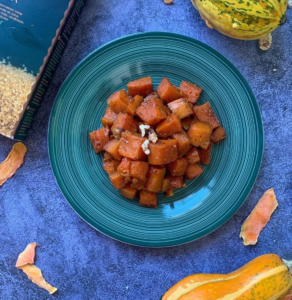
For a simple presentation, transfer the squash to a serving dish, arrange the roasted figs around it, and scatter the walnuts over the top.
A small drizzle of honey just before serving adds shine and sweetness.
You can also serve it with a spoonful of plain Greek yogurt for a tangy contrast or a scoop of vanilla ice cream for a more indulgent dessert.
For a fall dinner or holiday gathering, it makes a lovely alternative to traditional baked fruit desserts.
Storage and Reheating
Allow leftovers to cool slightly, then refrigerate them promptly in an airtight container for up to 3-4 days.
To reheat, place the squash in an oven-safe dish and warm at 325°F (165°C) until heated through.
The figs will soften further during storage, and the walnuts may lose some of their crunch. For the best texture, you can keep some walnuts separate and add them just before serving.
Although this dessert can be prepared ahead of time, it tastes best freshly roasted.
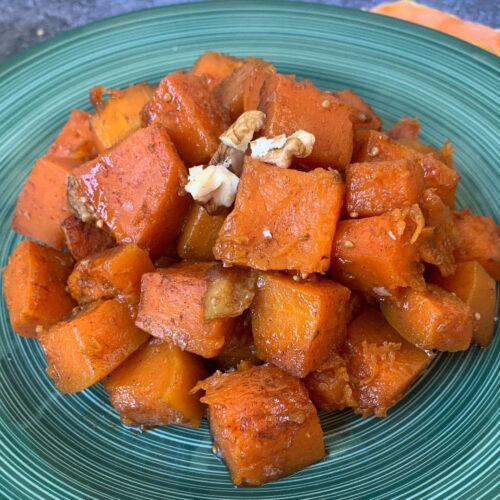
Honey Roasted Butternut Squash with Figs and Walnuts
Equipment
- Baking dish or rimmed baking sheet
- Cutting board
- Measuring spoons
- Mixing spoon or spatula
- Vegetable peeler (optional)
Ingredients
- 1.1 lb butternut squash 500 g peeled, seeded, and cubed
- 1 tbsp brown sugar Light or dark
- 1 tbsp honey + 1 tbsp honey for drizzle (optional)
- 1 tsp ground cinnamon See note below
- 3-4 fresh figs Sliced
- ¼ cup chopped walnuts about 30 g
Instructions
- Preheat the oven: Preheat your oven to 400°F (200°C).
- Prepare the squash: Peel the butternut squash, remove the seeds, and cut it into evenly sized 1-inch cubes. Arrange them in a baking dish or on a parchment-lined baking sheet.

- Add the seasonings: Add the brown sugar, honey, cinnamon, and some walnuts (optional). Toss until the squash is evenly coated, then spread the cubes in a single layer.
- Bake: Bake for approximately 20-25 minutes, or until the squash is tender and easily pierced with a fork.
- Add the figs and walnuts: Add the sliced figs and chopped walnuts. Continue roasting for another 10-15 minutes, until the squash is tender and lightly caramelized.
- Add the topping: Remove from the oven and drizzle with up to 1 tablespoon of additional honey, if desired.
- Serve: Serve warm and enjoy!
Notes
- Butternut Squash: Cut the squash into evenly sized 1-inch cubes for even cooking. Smaller pieces may cook faster, so check for tenderness toward the end of roasting.
- Fresh Figs: Choose ripe but firm figs. Very soft figs may lose their shape during roasting.
- Cinnamon: Use 1 teaspoon for a balanced cinnamon flavor. Add a little more if you prefer a stronger taste.
- Sweetness: Adjust the final honey and brown sugar topping to taste. The squash and figs already provide natural sweetness.
- Storage: Store leftovers in an airtight container in the refrigerator for up to 3-4 days. Reheat in the oven until warmed through.

Leave a Reply